




Why we source from female farmers
Our extra virgin olive oils come from women across the Mediterranean, but what's the reason for that and why are we building a community that champions female producers?

We didn't set out with a female-led agenda. But as soon as we started to look deeper into the olive oil industry, it became clear that we needed to champion women.
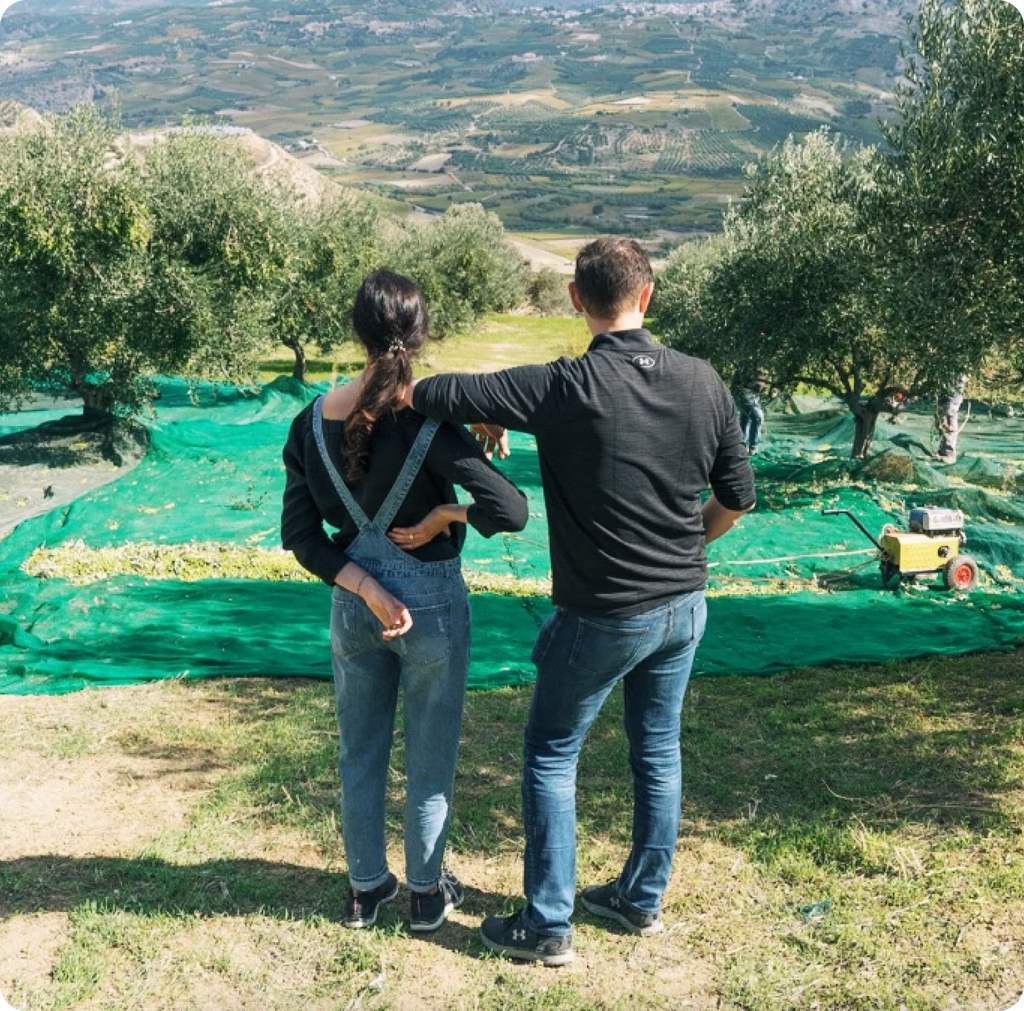
Our first oil came from a family friend, Maria in Crete. As we grew and realised we needed more oil than Maria and her family alone could produce, so we started to explore the olive oil space and found it had that all-too-familiar structure we see in many other industries.
From the harvest—and increasingly through to the mill and final commercial side—we were surrounded by men. These were “family” farms working land that had been passed down generation to generation, yet women, by and large, appeared invisible.
This absence sparked an interest, and, as we travelled through olive oil regions, we began asking people, "do you know any women making oil?" What we discovered set us on a path that would actively champion women in olive oil. Here’s why.

We need more women in farming with ownership over their own land.
There simply aren't enough women managing farms or making decisions about their own estates.
Let’s be very clear here: women are—and have always been—involved in the production of olive oil.
But it is heavily male-dominated, particularly in the management of the farms and commercial side. And we see management of land tied to the management of women, as we spoke about with Lulu Minns on her special International Women’s Day podcast series, “She Rebel”.
As of 2021, agrifood systems account for 40% of all female employment globally, a figure that is nearly equal to that of men. But, this equality is not reflected in ownership, and women own under 15% of the world’s agricultural land.
While across Europe, an average of 29% of farms are managed by women, the financial earn-out is not split the same.
Women are often involved in smaller-scale, family farms. This means the lion's share of the cash, land, and power is held by men.
By keeping women out of the decisions of the land and therefore without a stake in their estate—we're continuing to allow a system where men get to rule in absolution.

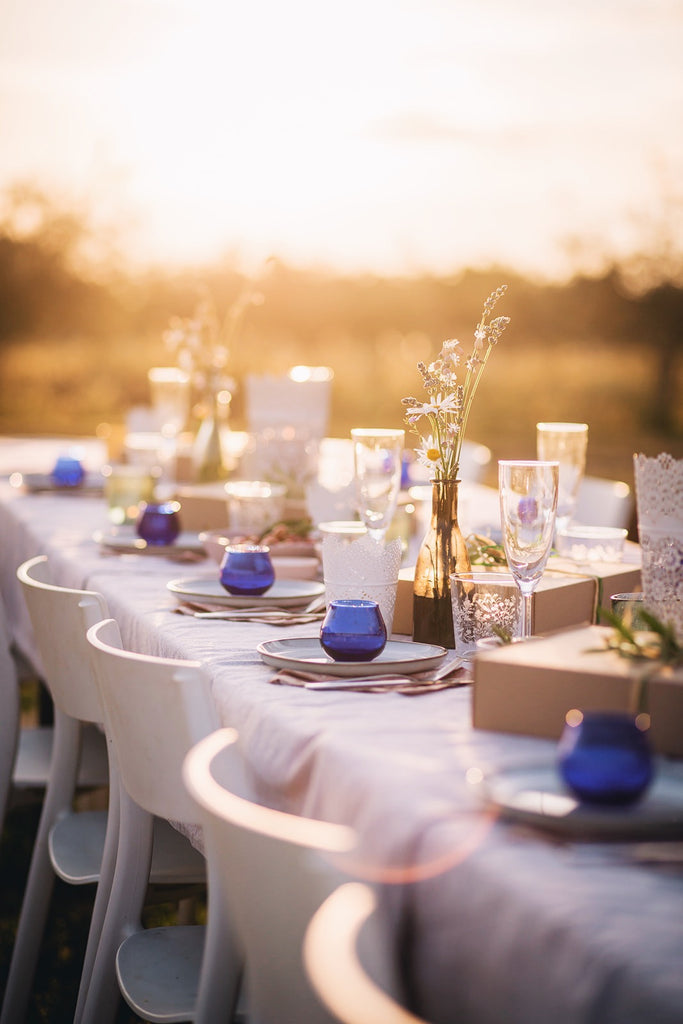
Women face more obstacles in farming, so we want to build a more equitable table.
“These challenges to women’s full and equal employment in agrifood systems hold back their productivity and sustain wage gaps. Closing the gender gap in farm productivity and the wage gap in agrifood systems would increase global gross domestic product by nearly USD 1 trillion and reduce the number of food-insecure people by 45 million.” — FAO.
We also know this: women often make less money for more work, while, on a global level, female farmers are putting in extra effort.
Across the world, women work more hours per year than men, and yet farms that they run are producing 20-30% less than the farms managed by men, even if they are of equal size.
The reasons for this 'crop gap,' according to the FAO, have nothing to do with an aptitude for farming and everything to do with the gender-specific obstacles.
It goes well beyond basic barriers like technology, markets, and infrastructure, and into the very fabric of the community. Much of this is cultural, varying across different regions and even families.
While many traditional olive groves are passed down generation to generation—and men and women are born at around the same rate so therefore the assumption would be these women are inheriting equal land—the management and decision-making of said land doesn't reflect that split.
"All in all, it seems that local cultural standards and values affect the overall integration of women in agriculture despite all incentives and contemporary policies." —Outlook on Agriculture
 But female farmers are just as good. In fact, we often find they're better.
Yes, rural women are up against greater constraints than the men in their communities, but when given the same opportunities:
"Women are just as good as men in farming," states the FAO, going on to explain that when they have equal access, evidence shows "there is a significant increase in agricultural output and immediate and long term social and economic gains."
Like the groves themselves, farming practices for olive oil are passed down from generation to generation—typically from father to son.
And with it always being done the same way, those practices themselves aren't necessarily improved.
On the flip side, women, we often find, are self-taught. The fact that they’ve been shut out of the system has led many female farmers to be more engaged in alternative sustainable and regenerative practices. While they may take some of the "art" from their families, the science—which is vital to the quality of the oil—comes from really skilling up in the space.
“Women are continuously innovating, and this characteristic takes on even more importance as they are faced with new challenges that need quick responses.”—FAO.
In the face of increasing climate change and instability, the role of women is paramount.
“Sustainable agriculture is seen by women also as a way to be empowered, as a means of emancipation. And it's also seen as a way to challenge the traditional gender division of agricultural work.” —Politico
This isn’t to say that women are better or more suited to making great olive oil. However, given the lack of expectation or precedent for women, those who do go into it tend to do so from a place of real passion and dedication, backed by advanced education. And as a result, the quality of their oil is almost a given. 👌

Women have always been doing this without the recognition, so we want to champion them.
There's a female interconnectedness in agriculture; our own cycles are tied to that of the land’s. From aligning with the moon's phases and the fertility of land, some of these ancient practices are coming back through holistic approaches like biodynamic farming.
And women have an important role to play in this relationship.
As we said at the start, women across the Mediterranean have ALWAYS been a part of olive oil production and the promotion of it across the world.
And yet, when you look at the faces behind many of the brands—they’re not represented.
We see our role less about simply “empowering” them or treating them like they’re some sort of underdog. It’s about shining a spotlight on these dark horses in the space and ensuring we’re creating a sustainable commercial partnership for them to do what they do best.
In 2026, the spotlight is finally being shone on a global scale.
This year, the United Nations has designated it as the International Year of the Woman Farmer (IYWF 2026), a global initiative led by the FAO to highlight the crucial role women play in agrifood systems.
Being a champion of women in the olive oil space, and actively seeking to work with them helps us ensure they're in a leadership space, fully participating in the decisions that directly impact their livelihoods, their land, and filter down into their community.
Research shows that full women’s integration into farming can only take place when some key conditions are fulfilled at a micro-level:
“When they have access to and ownership of land, when they are actively engaged in agricultural training programmes, when male farmers actually trust the management of the farm to their female counterparts. And finally when the local community accepts the new roles of women.” —Outlook on Agriculture
We’ll end simply with this saying:
“If you teach a man to farm, his family will eat. If you teach a woman to farm, the community will eat.”
Join the Olive Oil Club™.